Survivors in Fake a Player are defined by one practical objective: stay untagged or otherwise avoid being taken out until the round resolves. The strongest general approach is to read the space before committing to a route, keep an escape option behind you, and choose between hiding, looping, and juking based on the distance and angle of the chaser. Survivor play is about movement and decisions rather than defeating the player who is hunting you.
The evidence supports several survivor-facing records, but it does not establish a complete roster of survivor characters, fixed stats, a universal round timer, or one unchanged win condition for every mode. Use the current in-game panel for values that can change between updates.
Fake a Player survivor records
The table groups the survivor situations and techniques that the supplied game material describes. These are practical reference records, not a claim that every row is a separately selectable character or a permanent ability.
| Survivor record | What it does | How it applies | Main caution |
|---|---|---|---|
| Infection Tag Survivor | Avoid the initial Infector and remain untagged | Enter an Infection Tag round and play as a Survivor | A tag changes the player to the infected side |
| Juking | Create a miss with a sharp turn, sudden direction change, obstacle loop, or crouch | Use it during an active chase | It depends on space, timing, and the chaser's read; it is not guaranteed |
| Hiding | Break line of sight and gain time to plan | Use rooms, corners, and cover after checking the exit route | A known hiding place can be searched or exposed |
| Route and obstacle play | Use corners, obstacles, and repeatable loops to preserve distance | Choose a route with visible exits before entering | A blind turn can place the Survivor directly in danger |
| Multiple-chaser escape | Find a gap and change direction when surrounded | Read the nearest threats and move toward the shortest open escape | Running into a dead end makes the numbers advantage worse |
| Spectating | Study how surviving players move and loop | Use it after being tagged or eliminated | Observation can teach movement but cannot prove that another player is cheating |
The rows describe different decisions in the same survivor loop. Infection Tag Survivor is the mode-specific risk state; Juking, hiding, and route play are responses to pursuit; multiple-chaser escape is a pressure situation; and Spectating is the post-elimination learning option. Do not read the table as a confirmed power ranking. The supplied evidence does not provide complete survivor numbers or a verified list of selectable kits.
Choosing a survivor response
Start by identifying the threat and the amount of space available. If the chaser is not yet close, route planning is usually more valuable than an early panic turn. Look for a corner with more than one exit, a room that can be left without crossing the chaser's approach, or an obstacle that supports a repeatable loop. A route is useful only when you know where it leads; a corner with limited visibility can hide a threat from you as easily as it hides you from the threat.
When the chaser is close but you still have room, Juking can make them commit to the wrong line. The described actions include an abrupt turn, a sudden change of direction, circling around an obstacle, and crouching to alter the expected movement. A successful “ankle break” is a reported outcome in the video evidence, not a guaranteed mechanic. The same material also records a crouch attempt that failed, so use a juke to create a new route rather than treating one animation or input as a safe escape button.
Hiding is better understood as a temporary reset than as a win condition. Move behind cover only after checking how you will leave it. If the chaser has already seen you enter a corner or room, staying there gives them a simple search target. If the area is unfamiliar, a short retreat to a known route can be safer than pushing farther into cover with no second exit.
Use a loop when the map gives you enough width to turn without touching the obstacle or trapping yourself. Keep the next turn in view where possible, and do not repeat the same line after the chaser has learned it. A loop that works once can become predictable on the next pass. Change the timing or leave toward a different opening when the chaser begins cutting across the route.
Infection Tag and chase pressure
Infection Tag has a specific survivor danger: the initial Infector can tag a Survivor, after which that player joins the infected side. That makes early separation important. Avoid moving toward a cluster simply because other players are nearby; the safer choice may be to preserve distance and keep an independent escape route. The supplied material mentions rounds with different Survivor counts, including two or five, but it does not establish a fixed current rule. Check the live round display rather than planning around a presumed count.
Juke the Infector in Infection Tag
This moment supports the Infection Tag advice by showing the need to juke the player who is ‘it’ and avoid being tagged and turned infected.

The same movement principles apply when the pursuit comes from a Slasher-style threat or another chaser. Before crossing a doorway or turning into a narrow passage, leave enough room to reverse direction. Corners, room entrances, and confined spaces are specifically risky because a Slasher may attack from a position that was not visible on the approach. A route that looks short is not automatically safer if it removes your ability to turn; the map guide helps identify those route risks.
When several chasers approach, do not stare at only the nearest player. Quickly check where the group is closing and identify the widest gap. The evidence describes changing direction and using a juke while being pursued by multiple opponents, but it does not confirm a fixed sequence that always breaks a surround. Treat the maneuver as a decision under pressure: choose the opening that keeps the most future space, then avoid a straight line that ends at a wall or closed corner.
Movement decisions that survive mistakes
Good survivor play leaves a recovery option. If a turn reveals a chaser, reverse only when the space behind you is clear; otherwise take the next visible opening. If a juke fails, do not repeat the identical input immediately. Use the failed attempt to learn the chaser's position and redirect toward a route with more exits. If hiding is discovered, leave before the search closes the only doorway.
The order below is a useful decision check during a round:
- Confirm whether you are a Survivor and identify the mode or threat.
- Locate the nearest open route, obstacle, corner, or room with a known exit.
- Keep moving while there is distance; do not spend that distance on an unnecessary risky turn.
- Choose a juke when the chaser is close enough to commit but the space still has an escape opening.
- Break away from a predictable loop before the chaser cuts across it.
- If multiple chasers close in, move toward the widest gap instead of the shortest-looking dead-end path.
- If tagged or eliminated, enter Spectating and watch the remaining players' routes for ideas to test next round.
This sequence is a framework, not a promise of survival. Map layouts, threat positions, and the current mode change the correct choice. The related Maps and Movement topics should be treated as complementary: Maps determine the spaces available, while Movement covers the specific turns, loops, and direction changes.
Survivor kits and matchup claims
The supplied discussion mentions Cool Kid, John Doe, One X, and Azure as more suitable for dealing with a difficult target, while it describes Noly's kit as a poor fit in that situation. This is a limited matchup observation, not a complete Survivor tier list. No supported table of kit effects, unlock requirements, damage, speed, cooldowns, or universal matchups is available here.
Use those names as leads for an in-game comparison rather than as a guaranteed recommendation. First identify what the target is doing, then compare the available kit's actual behavior in the current version. If the relevant ability or statistic is not shown in the current game interface, do not infer it from the isolated discussion. A kit that was useful against one difficult target or one map space may not improve a general escape route.
What Spectating can teach
After a tag or elimination, Spectating turns the rest of the round into a movement review. Watch how a surviving player approaches corners, when they abandon a loop, and whether they preserve a second exit before hiding. Compare their choices with the threat's position rather than copying a single turn. The goal is to identify a repeatable principle—such as keeping an obstacle between both players—then test it in a later round.
Use Spectating to study survivor movement
This moment supports the Spectating advice by recommending that players observe another survivor's movement and how they loop around the killer.
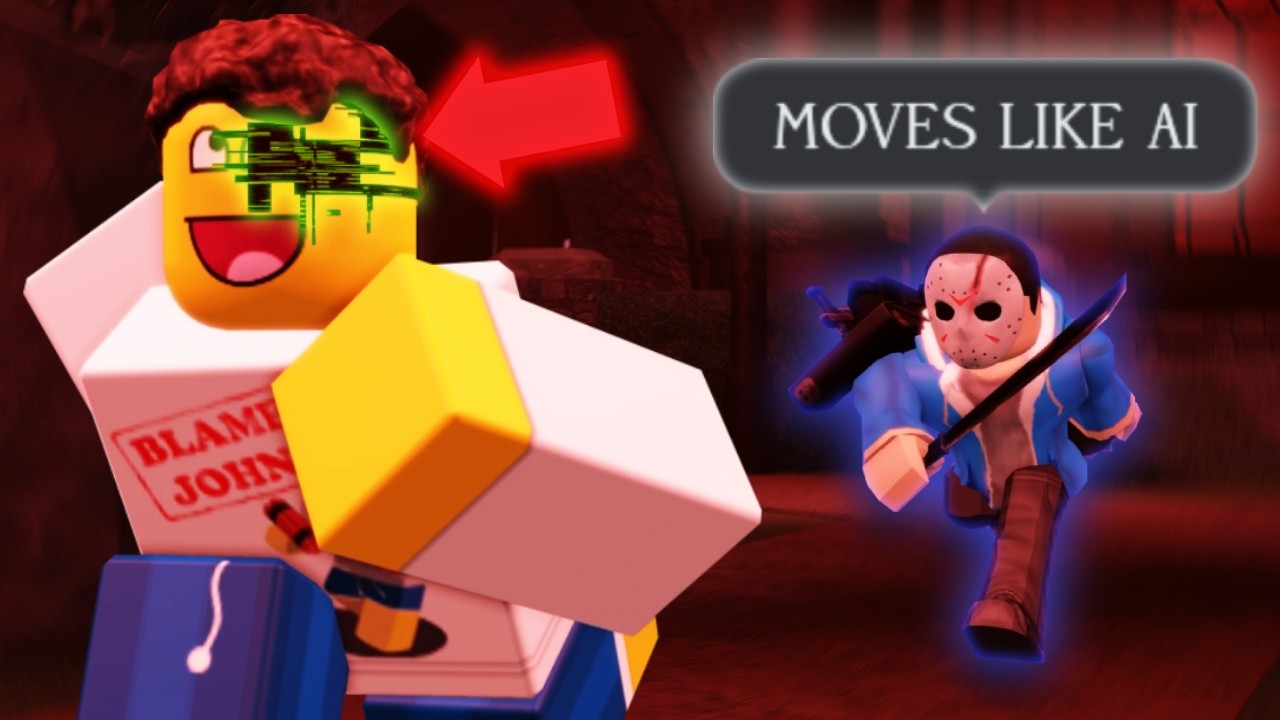
Spectating is also a way to separate unusual movement from confirmed cheating. The evidence includes a player calling someone a “hacker” because of apparent awareness, perfect looping, or unusual movement, but it does not verify that accusation. Treat what you see as an observation about positioning, not proof of an exploit or a player violation.
Limits to verify in the current game
Several survivor values remain version-sensitive or unresolved in the supplied evidence. The exact Survivor count, round timer, elimination rules, and complete settlement conditions are not confirmed for every mode. The descriptions of Infection Tag and Slasher-style pursuit establish useful risks, but they do not define one universal ruleset. Likewise, the kit discussion is too narrow to support a full character catalog or ranking.
Before relying on a precise value, check the current round interface, mode description, and available character or kit panel. If those panels disagree with a remembered route, follow the live game. The stable principles are to preserve exits, read the chaser's angle, use jukes as situational choices, avoid blind corners, and review surviving movement after elimination.
First-time Fake a Player survivor questions
What should I prioritize when a chase starts?
Keep a visible escape route and choose between a loop, a retreat, or a juke based on the chaser's distance. Avoid blind corners and paths with no second exit.
Does crouching always escape a chaser?
No. Crouching is one reported juke attempt, and the supplied evidence also records it failing. Use it only as part of a broader movement decision with an open route.
What happens when a Survivor is tagged in Infection Tag?
The tagged player joins the infected side, increasing pressure on the remaining Survivors. The exact Survivor count can vary or remain version-sensitive, so check the current round display.
Can Spectating confirm that another player is hacking?
No. Spectating can show routes, loops, and unusual positioning, but the supplied evidence does not verify cheating from those observations alone.