Movement in Fake a Player is about making the chaser commit to the wrong line, then using the opening before they recover. The reliable beginner pattern is to control distance, show a readable direction, wait for the opponent to move into it, cut away with a juke or sharp turn, and keep running instead of stopping to admire the dodge. The game’s public description frames movement around fakes, quick moves, and sharp dodges, so the goal is not simply to move faster.
What to practice in your first chase
Your first target is one clean escape from a committed opponent. Start by keeping enough space to see which way the chaser is actually moving. Use a short, ordinary movement pattern to invite a prediction, then change your line only after the opponent has invested in that direction. When the opponent misses the line, immediately take the open route and rebuild distance.
This approach applies whether you are the player trying to get away or the player trying to catch someone. Survivors, an Infector, and a Slasher can all be involved in the chase relationship described for Movement, but the decision is the same: read the other player’s real movement rather than reacting to every fake. Movement has no supplied public control table with confirmed keybinds, cooldowns, or trigger values, so practice the timing and route choice rather than memorizing a supposed input sequence.
Run and juke during a Fake a Player chase
This moment supports the chase practice of keeping moving and using a juke while an opponent pursues you.
How a chase changes direction
Movement is a short, branching exchange rather than a fixed button combo. First, the players close distance or enter an existing pursuit. The player being chased presents a direction, pace, or route that can be read. The chaser then either commits to that prediction or stays patient. Once the chaser has committed, the runner can branch into a juke, an ankle break, a duck, or a sharp turn. The chaser’s next state is determined by whether they followed the false line or held enough position to answer the real one.
After a successful change, the runner must convert the miss into distance. A pause gives the chaser time to regain position, so the next decision is normally to continue toward an open route or a useful corner. If a route can be repeated around an obstacle, looping can delay the pursuit, but it is not a guaranteed safe or invulnerable path. If the chaser refuses to overcommit, repeat the setup less often and look for a genuine route change instead of forcing the same fake.
Juke multiple opponents in a Fake a Player chase
This moment supports the section's focus on changing direction after opponents commit and turning the miss into distance.

Movement tools and chase roles
The names below describe the practical choices supported by the movement summary. Use them as decisions in a chase, not as promises of a guaranteed result.
| Movement choice | What it changes | Beginner use |
|---|---|---|
| Juking | Makes the chaser misread your line | Change direction, pace, or route during pursuit after showing a readable path. |
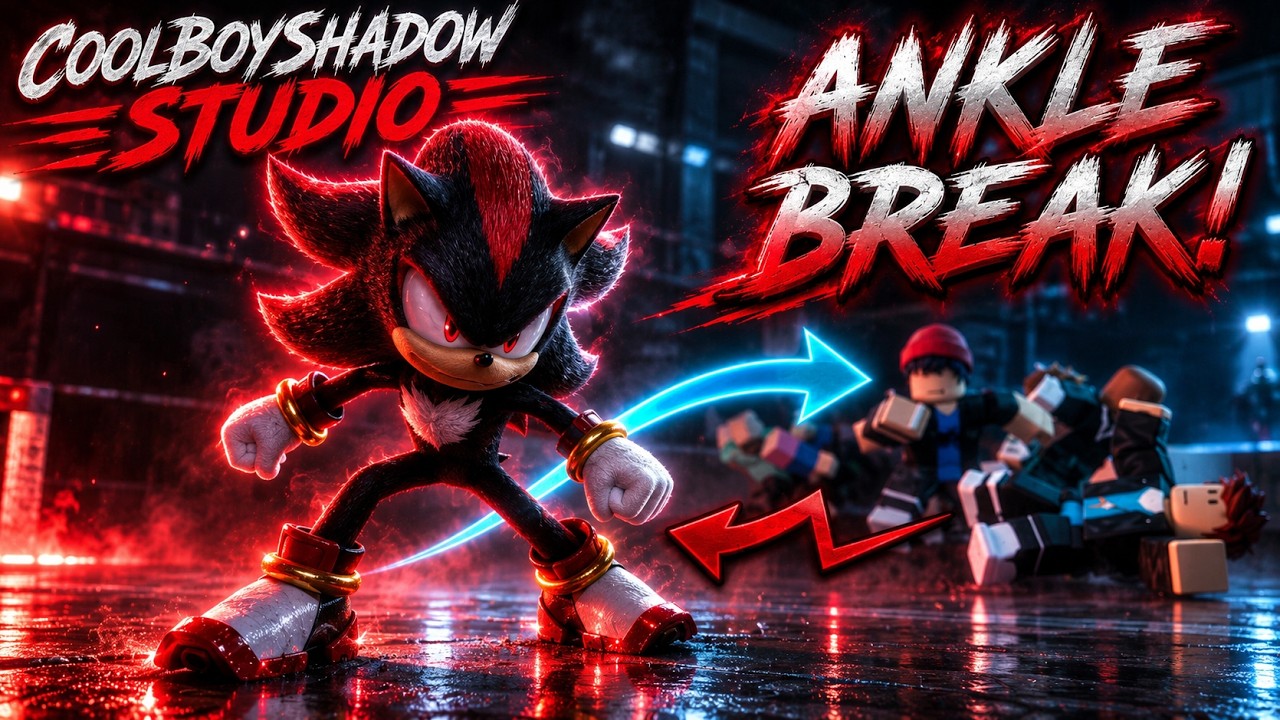
| Ankle Breaks | Removes the advantage of a committed direction | Cut the opposite way after the opponent has already moved toward one side. |
| Ducking | Changes the chase line at close range | Combine a duck or underpass with a direction change when contact is close. |
| Looping | Delays or stretches a pursuit | Repeat a useful route around an obstacle only while it keeps creating space. |
| Sharp Turns | Breaks a prediction with an immediate cut | Turn after the opponent commits, then run through the new opening. |
| Tempo changes | Makes your next movement harder to forecast | Show one rhythm briefly, then vary speed or direction instead of repeating it. |
Juking is the broad action: the available footage explicitly describes running and juking during pursuit. An Ankle Break is the useful outcome when a moving opponent loses position after you cut away. Neither is guaranteed against a stationary or patient observer. Ducking can work at close range, but the same evidence also includes cases where a player was caught after trying it. Treat Looping as route management, not as a fixed invincibility pattern; reports about “perfect looping” are player observations and do not establish a special movement rule.
Your first Fake a Player chase
- Choose the chase role. Decide whether you are trying to pass an opponent or catch one. As the runner, identify the next open direction. As the chaser, watch the other player’s actual line and avoid turning solely because they displayed a fake.
- Create readable distance. Do not spend the opening at point-blank range if another route is available. Maintain enough separation to see whether the opponent is moving, waiting, or committing to a side.
- Show a simple line. Move in a direction or rhythm that the other player can reasonably predict. The purpose is to give the chaser a decision, not to spam random turns before they have moved.
- Wait for commitment. Look for the opponent to travel into the displayed line or lean into a route. An early change can leave you in the same path and create no meaningful opening.
- Break the prediction. Use a juke, Ankle Break, or sharp turn in the opposite direction. At close contact, a duck can be paired with the change if the route allows it.
- Confirm the miss. Check whether the chaser has lost the line or whether they are still matching your turn. If they stayed patient, do not assume the fake worked; preserve your route and prepare a different branch.
- Run through the opening. Once the opponent misses, move immediately along the new route. Do not stop after the dodge, because the pause lets the opponent recover position.
- Use the environment carefully. If an obstacle or repeatable route helps, loop only while each pass creates time or distance. Leave the route when the chaser reads it or when it no longer gives you a useful branch.
- Review the result. If you are eliminated, Spectating can help you watch another player’s turns, loops, and pursuit choices. Use that view to compare when the opponent committed with when the turn happened, not to treat every unusual movement as proof of a special ability.
The checkpoint for a successful practice run is not a particular number of dodges. It is a visible sequence: the opponent commits, your line changes, the opponent loses position, and you keep moving into the space that change created. If one part fails, repeat that part rather than adding more random movement.
Priorities when the fake fails
- Distance before style. Keep a usable gap before attempting a complicated change. A stylish turn at contact range may leave no route to take.
- Commitment before counter. Wait until the opponent has chosen a direction. If they are stationary and watching, a repeated Ankle Break is less useful than a genuine route change.
- Escape before looping. Use a loop to buy time, not to prove that the route is unbeatable. Leave when the opponent begins matching the pattern.
- Variation before repetition. Do not always cut the same way or keep one tempo. A predictable fake gives the chaser the information they need.
- Observation before accusations. Spectating can reveal how a chase was won or lost. Claims about hackers, perfect loops, or knowing the killer’s position are player observations, not confirmed Movement mechanics.
When the opponent catches you after a juke, the likely recovery is to widen the setup on the next attempt and change the timing, not to repeat the same turn sooner. When a duck fails at close range, stop relying on the underpass alone and pair the next attempt with a different direction. When a loop stops creating space, exit toward a new line before the chaser settles into the pattern. When the chaser refuses to commit, stop offering the same bait and take the open route or wait for a clearer movement decision.
First-time Fake a Player movement questions
Is movement in Fake a Player only about moving faster?
No. The supported movement focus is distance control, baiting a direction, waiting for commitment, and cutting into the opening. Quick moves help, but speed alone does not replace reading the opponent.
Should I repeat the same juke when an opponent is chasing me?
No. Repeating one direction or rhythm makes the next move easier to predict. Vary the cut or tempo, especially after the chaser has shown that they can match your first fake.
Does looping guarantee that a chaser cannot catch me?
No. Looping can delay a pursuit around a useful route, but the available movement evidence does not establish a fixed invulnerable path. Leave or change the route when the chaser begins reading it.
What should I do when the opponent does not commit?
Do not force an early Ankle Break. Preserve your distance, take a genuine open route, or show a different rhythm until the opponent gives you a real direction to counter.
Can I confirm a hacker from perfect movement alone?
No. Reports about perfect looping or unusual awareness are player observations, not confirmation of a Movement mechanic or cheating. Use Spectating to review the route and timing without treating an accusation as proof.